Navigating a Difficult Healthcare Landscape
September 14, 2026
CPG ConnectSeptember 14, 2026
CPG Connect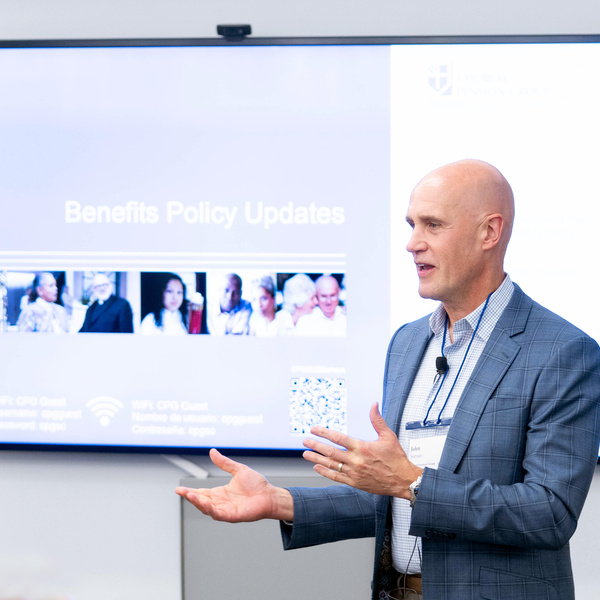 Today’s healthcare sector is one of the most challenging we’ve seen in decades: Escalating medical costs are driving premium increases and placing greater strain on people and organizations. Providing high-quality health plans while minimizing the impact of rising costs remains one of our top priorities.
To better understand the challenges, we sat down with John Servais, Senior Vice President of Benefits Policy and Design, to discuss how The Episcopal Church Medical Trust is balancing long-term sustainability with its commitment to serving members and employers.
We are operating in an unprecedented market, one of the most difficult I’ve encountered during my 33 years in the industry. The healthcare sector is experiencing its most severe inflationary period in four decades. Going into 2026, we expected patient treatment costs would rise between 8% and 9% nationwide; however, estimates have since been revised upward to around 10%, and forecasts indicate that increases could be as high as 15% in 2027.
The main drivers have been rising hospital and provider expenses, more complex and ongoing healthcare needs among members, expanded regulatory coverage mandates, and greater utilization of high-price specialty medications.
These drugs, in particular, have been a significant factor. The Medical Trust spent nearly 29% more on specialty medications in 2025 than in 2024. Although fewer than 5% of members used them, they accounted for approximately 64% of our total prescription drug spend last year.
In addition, GLP-1s for weight loss have substantially affected costs. Our spending on these medications rose from approximately $1.5 million in 2023 to $7.2 million in 2025. Without intervention, GLP-1 costs are projected to approach $10 million by 2027, more than six times the amount spent in 2023.
What’s more, providers’ growing use of artificial intelligence tools to optimize coding and billing—including assigning visits to higher-paying categories and identifying additional billable procedure codes—contributed an estimated 2% to group health plan expenses. At the same time, greater demand for costlier healthcare services by an aging population drove roughly 3.6% of overall annual cost growth.
Finally, changes to subsidies under the Affordable Care Act have resulted in more uninsured individuals, increased uncompensated care, and a greater share of cost shifting to the commercial market, which is the market we’re in.
Our focus is on the areas we can influence directly: plan design, vendor partnerships, and tools that help members make more informed decisions about their care.
We do not make changes lightly. We evaluate every decision through the lens of stewardship, sustainability, and our commitment to providing meaningful health benefits to members. We continually monitor industry developments and assess opportunities to increase value while preserving access to high-quality care. We leverage our purchasing power, maintain a disciplined approach to plan administration, and work closely with vendors to improve outcomes and manage long-term costs. Even so, additional intervention is required to keep contribution rates as low as possible.
After careful discussion and analysis, we made the difficult decision to raise deductibles and out-of-pocket maximums across most medical plans and to limit GLP-1 coverage to type 2 diabetes treatment. We recognize that this is unwelcome news, but these steps are necessary to ensure that the Medical Trust remains financially sustainable.
To help members seeking to lose weight, we’re introducing a new vendor, Digbi Health, for plans that use the Anthem and Cigna networks. Digbi combines personalized care informed by genetic and gut microbiome data plus access to GLP-1 medications at direct-to-consumer prices. Members who use GLP-1s for a diagnosis other than diabetes will be responsible for the medications’ cost.
In addition, we’re exploring ways to expand telehealth services, particularly for members in rural areas, to improve access to healthcare while managing costs. We will continue benchmarking our health plans against those offered by other denominations within the Church Benefits Association to identify areas for improvement and collaboration.
Fall 2026
Meet CPF Trustee, the Very Rev. Brendan Barnicle, and learn how his experience in finance, law, and parish ministry helps inform his service on the board.
Fall 2026
Discover how fixed-income investments support CPF’s long-term strategy and help provide stability in a changing investment environment.
Fall 2026
CPG educational events provide opportunities for learning, fellowship, and practical guidance on topics ranging from benefits and financial wellness to retirement readiness and personal well-being.
Fall 2026
Through books, public conversations, media engagement, and events, Church Publishing authors are bringing ideas beyond the page and into communities across the Church.

Fall 2026
Meet Seraina Lamlin, Church Insurance Company’s Vice President of Client Services and mid-Atlantic field representative, and learn how she helps Episcopal institutions manage risk and protect their ministries.
Comments? Questions? Concerns? CPG is listening. Please reach out to us at corpcomm@cpg.org
You will be redirected to a new tab for live remote support. Please confirm you're on a call with a Client Services team member to continue.
 As a cost-saving measure, beginning January 1, 2027, medical and prescription drug coverage will be provided through separate plans rather than a single bundled offering. This change prevents more than $7 million in additional prescription drug costs from being reflected in plan rates.